
The Rio Carnival Guide
This site provides information
about Rio Carnival 2009, about all aspects
of Carnival in Rio de Janeiro. Find here all Rio Carnaval
events,
venues, its history, 2009
Rio Carnival tickets, costumes
for the 2009 Samba
Parade and Sambodromo
information, accomplished with insiders´ recommendations.
You will be able to book your hotel-only and air-inclusive packages to Carnival in Rio. Listen to the 2009 samba
songs. All FAQ
answered about Carnival in Rio de Janeiro.
Although Carnival (Carnaval in Portuguese) is celebrated in towns and villages throughout Brazil and other Catholic countries, Rio de Janeiro has long been regarded as the Carnival Capital of the World. The Rio Carnaval is not only the biggest Carnival, benchmark against which every other carnival is compared but also one of the most interesting artistic events on the Globe. Pretty much everyone has heard of the Rio Carnaval. Foreign visitors to it alone number around 500,000 every year.
Rio Carnival is a wild 4 day celebration, 40 days before Easter. It officially starts on Saturday and finishes on Fat Tuesday with the beginning of Lent on Ash Wednesday after which one is supposed to abstain from all bodily pleasures. Carnival with all its excesses, celebrated as a profane event, can thus be considered an act of farewell to the pleasures of the flesh. It usually happens in February, the hottest month in the Southern Hemisphere, when the Rio summer is at its peak.
There are carnival
celebrations in virtually every corner of Brazil,
the best-known ones taking place in Recife together
with the neighboring Olinda (in the Northeast
of Brazil) and Salvador. But the biggest and most
famous carnival is undoubtedly the Carnival in
Rio de Janeiro.
Read all the details of the 2009
Rio Carnival - calendar,
programs, events and venues with recommendations,
schedule and ticket details. |
One of the greatest elements of the Rio Carnaval is that it not only provides entertainment for many people around the world but at the same time it gives also a chance to learn about the true culture of Brazil. Carnival is very important to the Brazilians being their very rich cultural manifestation.
It is a euphoric event where people dance, sing, party and have tons of fun. There are many parties that take place before, during and after Carnival all night and all day. It allows someone's true heart to come out and have as much fun as possible.
Rio Carnival is the result of months of preparation. People eagerly anticipate the start of each year's Rio Carnival. It begins with the crowning of the Fat King (King Momo), who is presented with a giant silver and gold key by the city's mayor.
|
|
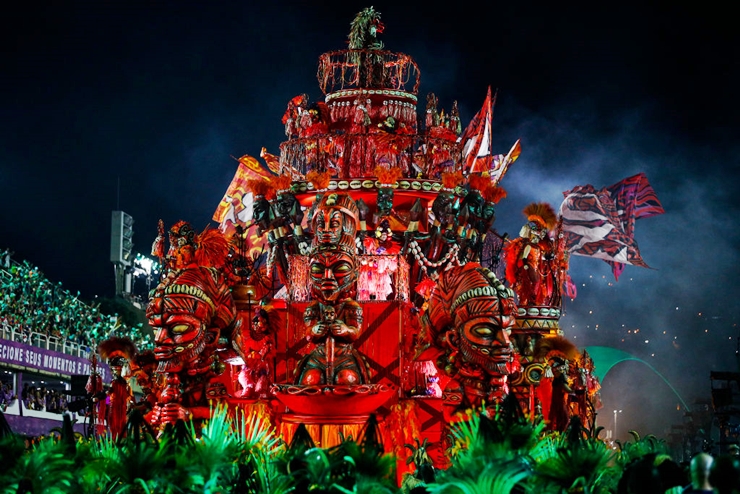
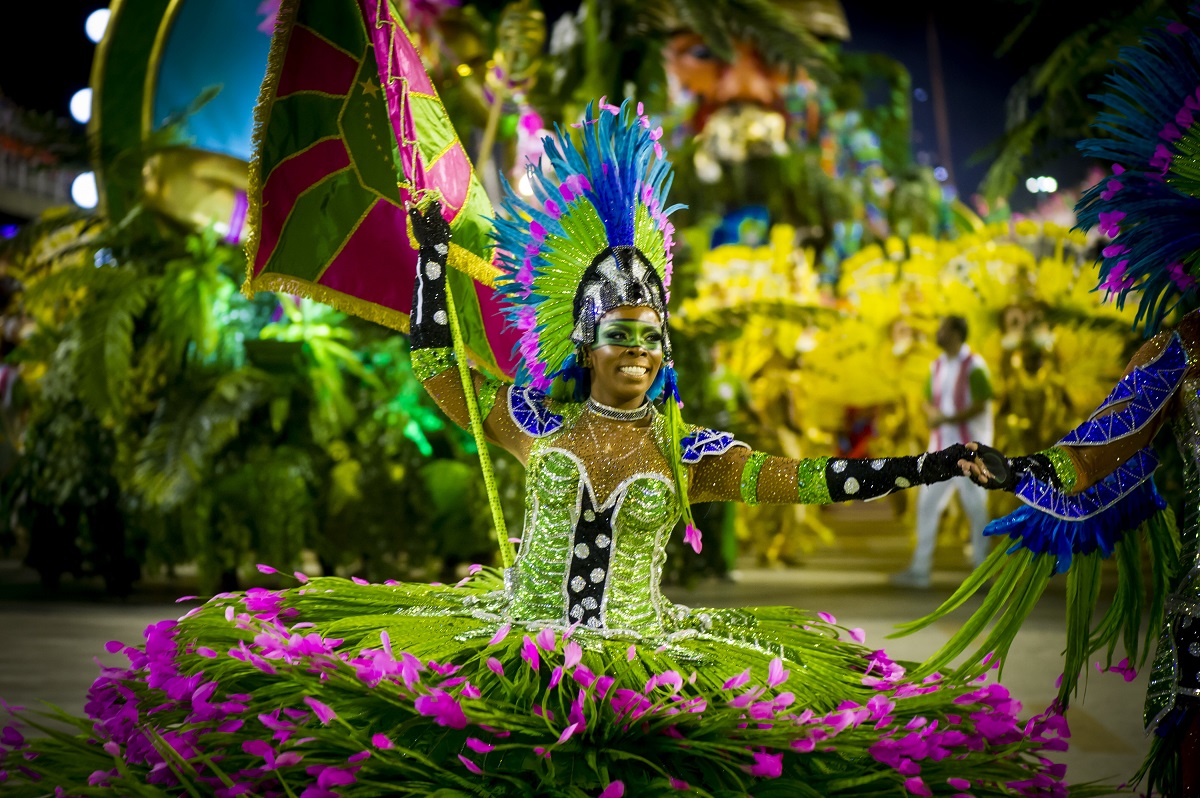
Then it is Carnival all over the place, in the streets and squares, bars, clubs and all other venues, taking over the whole city of Rio and culminating in the Rio Carnival Parade also known as the Samba Parade.
Coming to Rio
Carnival means a bit of preparation though.
You should not only get your flight and accommodation
but think about your Rio
Carnival tickets in advance, too. Study
the Rio
Carnival 2009 event calendar and pick the
ones you intend to attend. Make sure whether,
how and when you have to buy your tickets.
Try to organize your accommodation also well in advance and get your costumes for the Samba Parade.
After all the preparation work just come, dive in and enjoy it all!
|
Ingredients of the Rio Carnival
One of the most involved groups in Rio Carnival are the poorest neighborhoods, the so called favelas. The favelas are shantytowns or slums, in which houses are made of cardboard or other scraps, and they are often without water, electricity and sewage system. However, no matter how bad a situation the favelas´ residents are in, they join in the festivities and they actually "make" the Carnival in Rio. Carnival really means a lot to them because for once during the year, they get to go out and have as much fun as they can. And you will see, they can indeed.
Residents of the favelas are often members of a local samba school and are deeply involved with the performance and costumes of their groups. Carnival and samba is their passion alongside football.
Gays and drug queens also come and help out and become very involved in Rio Carnival. For everyone, this is a time to come together as a whole and have fun together. Brazil once becomes the most tolerant society.
They may try to organize it, glamorize it, televise it, even industrialize it but Rio Carnival is something that comes deep from the fun-loving soul of the Rio people. It does not depend on any authority or sponsor to happen. Carnival in the streets is a living proof of this passion. It's free, and everybody's welcome to participate.
Accommodation during Rio Carnival
Book your air-inclusive or hotel-only packages with us.
You should really organize
your accommodation for the 2009
Rio Carnival well in advance. The best hotels, especially
in South Rio (the Zona Sul) are booked up early, so
it¹s a good idea to make a reservation at least
3 or 4 months in advance. We can offer you a complete package with airfare from your hometown, accommodations and tickets to the parade. If you already got your airfare, it's okay to book your hotel. Our experts will certainly recommend a hotel within an area that is most appropriate to your life style.
Where to Stay
The so-called Zona Sul (the South End i.e. South Rio) is by far the most pleasant place to stay in Rio. It is by the sea and is the most civilized part of the city. Copacabana and Ipanema together form a big stage offering a carnival happening at every corner.
Leblon, being a bit more upscale is also an excellent location. Most hotels only offer a fixed-rate 5 night package during Carnival, against pre-payment, and these rates are significantly higher than at other times of the year. We have pre-booked hundreds of rooms at over 50 hotels, from 3 to 5 star, beach front or a couple of blocks to the beach.
For all budgets. All with breakfast, taxes, private bathroom and a great location, within 3 or 4 blocks to the beach in Copacabana, Ipanema and Leblon. Check our Accommodations options.
| Rio Carnival History |
|
|
|
The roots of Carnival trace back to the ancient Romans and Greeks who celebrated the rites of spring. Across Europe, including France, Spain and Portugal, people annually gave thanks by throwing parties, wearing masks and dancing in
|
|
 |
|
the streets. Such traditions were carried over to the New World.
The Portuguese first brought the concept of "celebration or carnival" to Rio around 1850. The practice of holding balls and masquerade parties was imported by the city’s bourgeoisie from Paris. However, in Brazil, the traditions soon became different. Over time, they acquired unique elements deriving from African and Amerindian cultures.
Groups of people would parade through the streets playing music and dancing. It was usual that during Carnival aristocrats would dress up as commoners, men would cross-dress as women and the poor dress up as princes and princesses - social roles and class differences were expected to be forgotten once a year but only for the duration of the festival.
Brazilians used to riot the Carnival until it was accepted by the government as an expression of culture. The black slaves became actively involved in the celebrations. They were able to be free for three days. Nowadays the slums' black communities are still the most involved groups in all the carnival preparations and they are the ones for whom Rio Carnival means the most.
By the end of the 18 century the festivities were enriched by competitions. People would not just dress up in costumes but also perform a parade accompanied by an orchestra of strings, drums and other instruments. These ever more organized competitions became the main attractions of the Carnival in Rio de Janeiro.
Until the beginning of the 20th century, street carnival in Rio was musically a very euro centric affair - Polkas, Waltzes, Mazurkas and 'Scottish'. Meanwhile, the emergent working class (made up mainly of Afro Brazilians, along with some gypsies, Russian Jews, Poles etc.) developed their own music and rhythm. These people were mostly based in the central part of Rio, on a land the rich did not want, on the hills and swamps behind the dockyards; an area which came to be known as 'Little Africa' now recognized as the cradle of samba.
The parades were halted during World War II and started again in 1947. By then the main competition took place downtown on Avenida Rio Branco.
Carnival has gone a long way since it was brought to Rio having become one of the biggest events in the World. One of the most important recent developments was that the biggest parade the Samba Parade moved from the streets downtown to the purpose-built Sambodromo.
|
|
Have the experience of a life-time!
Come to Rio Carnival to see and experience it all yourself
|
|
Rio Carnival or Samba Parade |
|
|
| Rio Carnival Calendar |
Year |
Starting Saturday |
2006 |
February 25th |
2007 |
February 17th |
2008 |
February 2nd |
|
|
2010 |
February 13th |
|

Samba
Almost all of the music played during Rio Carnival is samba. It is a uniquely Brazilian music originating from Rio and a dance form that was invented by the poor Afro-Brazilians.
The word samba comes from the Angolan world semba referring to a type of ritual music. The word had a variety of meanings to the African slaves brought to Brazil during the 17th, 18th and 19th centuries. It meant to pray or invoke the spirits of the ancestors and the gods of the African Pantheon. As a noun, it could mean a complaint, a cry, or something like "the blues".
The Samba Schools
The samba schools are vital elements of Rio Carnival. They are social clubs representing a particular neighborhood, usually a working class community of the slums (favelas). They have a samba hall to entertain and practice their samba and a separate production unit to make their costumes and floats for their Rio Carnival Parade.
The samba schools entertain the community through samba nights and create a pageant for the Samba Parade. They have to pick themes, write music and lyrics, make costumes and floats and practice all year around to succeed in the Parade.
|

Street Bands and Parties
Rio
Carnival 2009 Schedule
Each neighborhood in Rio has its favorite Carnival street band(s). There are more than 300 of them in Rio nowadays and each year this number increases. Each band has its place or street for its parade and the big ones usually close the streets to the traffic. They usually start in January and last till the end of Carnival. Thus, since the beginning of the year, you can often see groups of people dancing samba in the streets of Rio at the weekends and during Carnival.
Usually the people who organize the band's procession compose their own music which plays all the time during the parade mixed with old carnival music and samba songs that have become classics.
The Carnival bands consist of an orchestra, mainly bass, marching along a pre--determined route or staying at the same place, joined by hordes of enthusiastic samba revelers dressed in costumes, bathing suits, plain clothes and many in drag. Blocos are usually smaller, attracting more of a neighborhood crowd, bandas being bigger in size.
The most famous Carnival bands are
- Cordão do Bola Preta is one of the most traditional bands parading downtown.
- Banda de Ipanema goes out on three separate days in Ipanema, followed by a huge crowd with lots of gay revelers.
- Suvaco do Cristo parades in the Botanic Garden District, right below Christ-the Redeemer statue's arm. The name in English translates to "Christ's armpit", and was chosen for that very reason.
- Carmelitas was supposedly created by nuns but in fact it is just an allegory of the band. It parades in the hills of Santa Teresa.
The operation of a Carnival street band is really quite simple. First people gather at some well known spot, such as a square or neighborhood bar. After a couple or more hours of getting together, the band starts marching its way down the streets. Do not miss the meet-up part itself. Enjoy the show performed by drag queens and children, stopping cars and buses trying in vain to make their way through the crowds. Drivers caught in a band gridlock have nothing to do but relax and enjoy the moment.
Seniors and children of all ages also participate in this street Carnival type of events, so this is the ideal time for the whole family to have a good time together. South Rio bands march in the afternoon. Gathering usually starts around 4 p.m.
Where the bands pass, major streets are closed to traffic and bus routes are changed, to avoid the inevitable jam. Some bands attract as many as over 10,000 participants. Most bands also have official T-shirts for sale on the spot for about US$10, to help with the costs. They make great souvenirs, as they are sold only on Rio Carnival days. |
| Arriving for Rio Carnival |
Most people fly into Rio's international Airport Galećo. The other city airport, Santos Dumont, is the domestic airport which is located downtown.
We offer roundtrip transfer from both airports as well as from the city main port, located downtown Rio, both guided or with driver only. In any case, somebody from our representative office will be waiting for you with a sign with your name as soon as you reach the public area of the airport - after you collect your luggage. The good thing of getting a guide is to already have a first lecture on Rio and get to get all your questions answered. Inquire with our experts by calling the Carnival Help Desk at 1-877-559-0088.
If you prefer to do it on your own, from Galećo you can take an air conditioned bus into the city or the South End (Zona Sul) for R$6.50 (about US$4). The company is called Real and busses leave straight from outside the terminal. Busses stop anywhere on route where requested. A taxi to Copacabana or Ipanema will cost you around R$70 (US$50). Pay by the meter or negotiate a set fee in advance.
There are ATM machines at both airports which work with all major debit/credit card, giving you a better rate than any Foreign Exchange bureau.
You will find more practical advice and insiders´ recommendations for your arrival to Rio Carnival in your Guides.
|
|
|
|